
The commitment and knowledge certificate, mandatory since its codification in Article L. 214-8 of the Rural Code, imposes a seven-day delay between its signing and the actual handover of the dog. This document formalizes the physiological, behavioral, and medical needs of the animal. We recommend considering it as a genuine preliminary audit rather than just an administrative formality.
Identification I-CAD and updating the file: a technical point often overlooked
Every dog must be identified by the age of four months at the latest and before any transfer, whether free or paid. The microchip is useless if the owner’s contact details are outdated in the I-CAD file.
After an adoption or a change of owner, updating the I-CAD contact details determines the actual effectiveness of the microchip. A runaway dog whose record points to a previous owner will not be returned in a reasonable timeframe. The modification procedure is done online, directly on the I-CAD portal, and takes a few minutes.
To delve into the specifics related to each breed and adapt your choices of equipment or food, you can access La Maison des Animaux, which details these topics by canine profile.
We regularly observe owners who confuse identification and traceability. The microchip guarantees a legal link between the dog and its owner, but it does not replace the health record or the European passport in the case of cross-border travel.
Dog vaccination schedule: adapting reminders to lifestyle
Vaccination reminders no longer follow a uniform annual rhythm. The protocol depends on the vaccine administered, the dog’s age, its immune status, and its actual exposure to pathogens.
The rabies vaccination practically only concerns traveling dogs or regulated categories. For a sedentary dog living in an urban area, there is no legal obligation outside of specific contexts. On the other hand, kennel cough becomes relevant as soon as the dog frequents groups (boarding, dog clubs, exhibitions).
Leishmaniasis is discussed according to the geographical area. A dog living in southern France or regularly traveling in the Mediterranean area is at risk of exposure to sandflies, which justifies vaccination, combined with topical repellents.
Structuring a usable health record
We recommend centralizing in a physical or digital health record the dates of initial vaccinations, vaccine batches, and upcoming deadlines. This document facilitates communication between veterinarians, especially in the case of emergency consultations outside the usual practice.
- Initial vaccination of the puppy: generally two injections spaced three to four weeks apart, followed by a first booster one year later
- Subsequent boosters: frequency varies according to the valence (some strains cover several years, others require closer boosters)
- Situational vaccinations: rabies for travel, kennel cough for groups, leishmaniasis for endemic areas
Heat stroke prevention: beyond obvious advice
A dog locked in a stationary vehicle can reach a critical threshold in less than fifteen minutes, even at moderate outside temperatures. Recent recommendations emphasize transport as a major risk situation, not just summer walks.
Brachycephalic breeds (bulldogs, pugs, shih tzus) have a structural vulnerability to hyperthermia. Their upper respiratory anatomy limits thermoregulation through panting. For these dogs, we advise against any non-air-conditioned transport beyond high spring temperatures.
Signs of emergency to recognize
Excessive panting accompanied by thick drool, a staggering gait, or bright red mucous membranes indicate an ongoing heat stroke. Cooling must be gradual: lukewarm water on the belly and pads, ventilation, then immediate veterinary consultation. Ice-cold water causes vasoconstriction that worsens the situation.
Feeding and hydration: balancing between kibble, home rations, and BARF
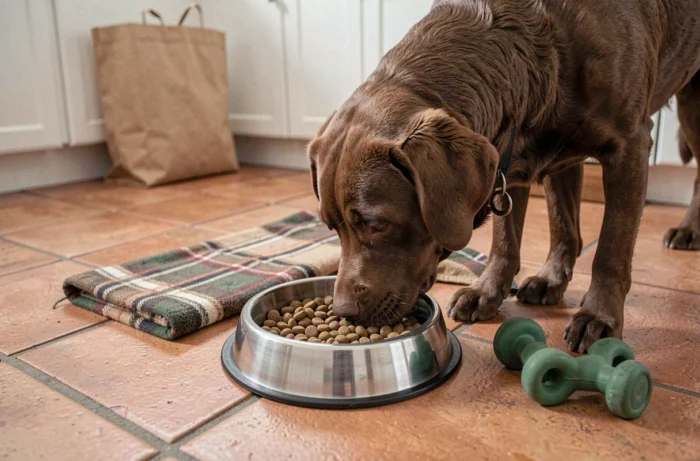
The choice of feeding method relies on three parameters: the dog’s physiological stage, its activity level, and any diagnosed intolerances. No method is universally superior.
Extruded kibble offers practicality and nutritional stability verified by manufacturers, provided you select a range whose protein-caloric ratio matches the dog’s size and age. A sudden dietary transition almost always causes digestive issues. We recommend a gradual transition over seven to ten days, mixing old and new food in increasing amounts.
- Home rations: require precise calculations of calcium, phosphorus, and fatty acid intake, ideally supervised by a veterinary nutritionist
- BARF (raw feeding): imposes rigorous traceability of meats and strict adherence to the cold chain to limit bacterial risk
- Hydration: fresh water should be available at all times, renewed daily, and the bowl cleaned to avoid bacterial biofilm
Storage of dietary supplements and medications also deserves special attention. Packaging exposed to heat or humidity loses effectiveness, making antiparasitic treatments or joint supplements partially ineffective.
Socialization and physical exercise: two pillars of behavioral well-being
An under-stimulated dog develops compensatory behaviors (destruction, barking, compulsive licking) that are often mistakenly interpreted as character problems. Mental exercise is as important as physical exercise.
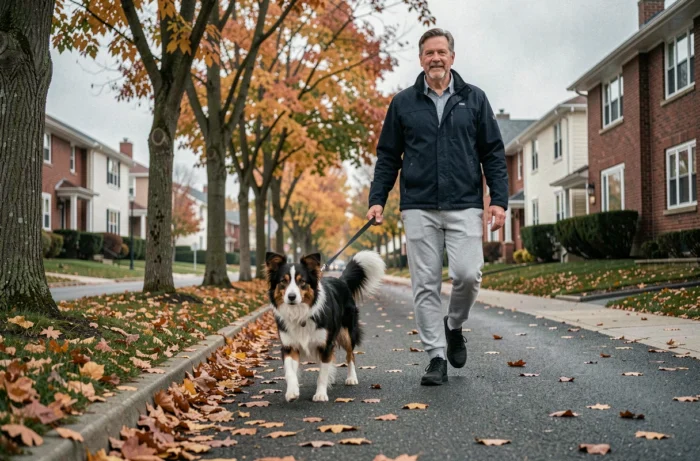
Daily walks serve a dual role: exploratory olfaction and social interaction with peers. A dog that only goes out in a fenced garden does not access this sensory stimulation, regardless of the available space.
Positive reinforcement training remains the most documented method in terms of long-term effectiveness. Gradually acclimating the dog to being handled (paws, ears, mouth) significantly simplifies veterinary care and grooming, while reducing stress during consultations.
The commitment certificate signed before adoption reminds of these behavioral needs. It is not a regulatory coincidence: abandonments related to behavioral issues remain a frequent reason for transfer. Anticipating the mental and physical burden that a dog entails daily, even before its arrival, conditions the success of long-term cohabitation.