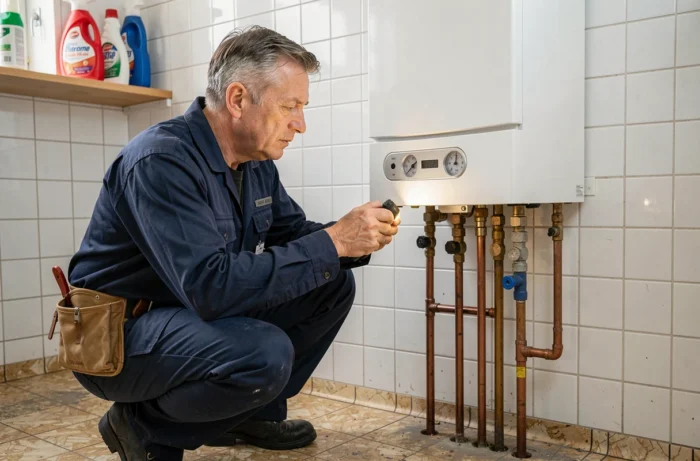
A boiler that breaks down on a January evening or a leak spotted at the foot of a radiator on a Sunday morning: in Brussels, these situations often occur at the worst possible time. The reaction in the first few minutes determines the extent of the damage, the cost of repairs, and the insurance coverage. It is essential to know what to turn off, who to call, and what Brussels regulations actually impose on both tenants and landlords.
Heating leak in Brussels: what the regulations require before calling a heating technician
Before picking up the phone, it’s better to know who, between the tenant or the landlord, should finance the intervention. This official distribution of responsibilities changes the management of the emergency.
The Government of the Brussels-Capital Region has adopted a mandatory list of repairs for which the tenant or landlord is responsible. Routine maintenance of the boiler (cleaning, replacement of small worn parts) is the tenant’s responsibility. In contrast, the replacement of an outdated heating element or a structural component of the system falls to the landlord.
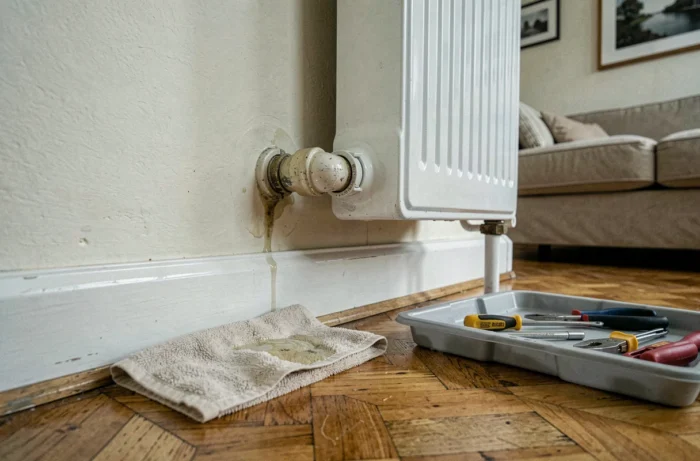
When a leak occurs at a radiator connection, the tenant can call a heating technician for routine repairs. If the problem arises from a concealed pipe or a defect in the installation itself, it is the landlord’s responsibility to organize and finance the intervention. Confusing the two cases can lead to a dispute over the bill, sometimes more costly than the repair itself.
To better understand heating solutions on Le Comptoir Web, it is useful to know this distinction before picking up the phone.
Fire insurance and water damage: the obligation that Brussels tenants ignore
Since November 1, 2024, tenants in Brussels must take out fire insurance and be able to prove payment of premiums. This obligation applies to all housing, including those equipped with an individual boiler or a gas installation.
In the event of a heating leak causing water damage, reporting to the insurer is a condition for coverage. An uninsured tenant risks having to bear the cost of repairs alone, including damages to common areas or a neighboring apartment.
Report the incident in a timely manner
Most home insurance contracts in Belgium require reporting within days of noticing the incident. Waiting until the end of the repair to inform the insurer can lead to a denial of coverage. The reflex to adopt, even before contacting a heating technician, is to photograph the visible damage and note the time of the observation.
- Shut off the water supply or the valve of the heating circuit to limit the extent of the damage.
- Photograph the leak, signs of moisture, and any damage to furniture or flooring.
- Notify the landlord in writing (a simple timestamped message is sufficient at first).
- Contact the insurer within the timeframe specified in the contract, usually a few working days.
This sequence protects both the tenant and the landlord. It establishes traceability that the insurance expert can utilize.
Boiler breakdown in Brussels: identify the problem before the intervention
Calling a repair technician without checking a few basic points can result in a service charge for a trivial cause. Some boiler breakdowns can be resolved without tools.
Checks that any occupant can perform
- Check the circuit pressure on the boiler’s pressure gauge: too low pressure is the most common cause of automatic shutdown, and refilling is done via a valve located under the appliance.
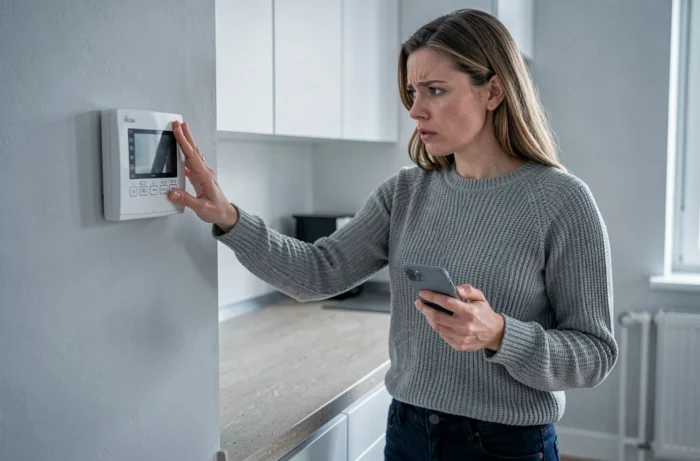
- Check the room thermostat: worn batteries or an accidentally altered setting can prevent startup.
- Ensure that the gas supply is functioning (e.g., stove flame) to rule out a network outage.
- Consult the error code displayed on the boiler and look it up in the manufacturer’s manual.
Identifying an error code before the call saves time for the heating technician and reduces the duration of the intervention. Some repair technicians even request this information as soon as the phone contact is made.
Gas smell: an emergency of a different kind
A gas leak is not a typical repair situation. The protocol is strict: do not touch any electrical switches, open windows, evacuate the premises, and call the emergency number of the network operator (Sibelga in Brussels). Recent events near the Central Station, where about a hundred people were evacuated due to a gas leak, remind us that this type of incident is serious.
Emergency heating repair in Brussels: choose a reliable provider
The boiler repair market in Brussels is fragmented. No central aggregator allows for real-time price comparisons. Prices vary significantly depending on the time, day, and area of intervention.
A certified heating technician in the Brussels Region must have a competency certificate to work on gas installations. Requesting this document before confirming the intervention is not excessive caution; it is a regulatory precaution. An unlicensed technician can hold the occupant liable in the event of subsequent damage.
Some concrete criteria help filter offers:
A detailed quote before the intervention, even by phone, remains the best indicator of seriousness. Companies that refuse to provide a price range before dispatch should be dismissed. The mention “starting from” followed by a very low amount in online advertising does not guarantee anything about the final amount.
The actual cost of a repair depends on the diagnosis, not the dispatch. A simple intervention (repressurization, replacement of a seal) remains moderate. The replacement of a major part (three-way valve, heat exchanger) represents a completely different budget, and it is at this point that the tenant/landlord question becomes central again.
Heating this winter in Brussels will cost more than last year, according to several analyses of the energy market. A scheduled annual maintenance before the cold season reduces the risk of nighttime breakdowns when emergency rates apply and intervention times lengthen.