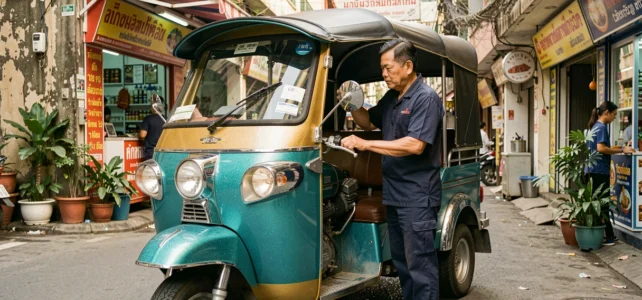
The tuk-tuk market in Thailand does not operate like that of a conventional vehicle. The displayed prices vary depending on the province, the buyer’s profile, and the type of registration sought. A used model in Udon Thani can start around 70,000 baht, while a new vehicle intended for private use in Bangkok easily reaches 250,000 baht, sometimes more for a foreign buyer.
Yellow plates, white plates: the real barrier to buying a tuk-tuk
Before discussing budget, we recommend clarifying the registration issue. Tuk-tuks in commercial circulation bear yellow plates, reserved for taxi license holders. A private individual, whether Thai or foreign, cannot legally drive with these plates.
For private use, one must go through a Department of Land Transport (DLT) office to convert the registration to white plates. This administrative process remains poorly documented and varies from province to province. In Chiang Mai, some dealers already offer tuk-tuks with white plates, but the stock remains limited.
A foreigner driving a tuk-tuk invariably attracts police attention. Without valid white plates and the appropriate permit noted on the international license, inspections are frequent and fines almost certain. This administrative point conditions the entire project; you will find more tips on Voyageurs Créateurs regarding the steps to anticipate.
Purchase price of a new or used tuk-tuk in Thailand
The price of a new tuk-tuk varies significantly depending on the engine type, finish, and city of purchase. In Bangkok, prices are notably higher than in the provinces, particularly because tourist demand inflates prices and sellers adjust their pricing based on the customer’s nationality.
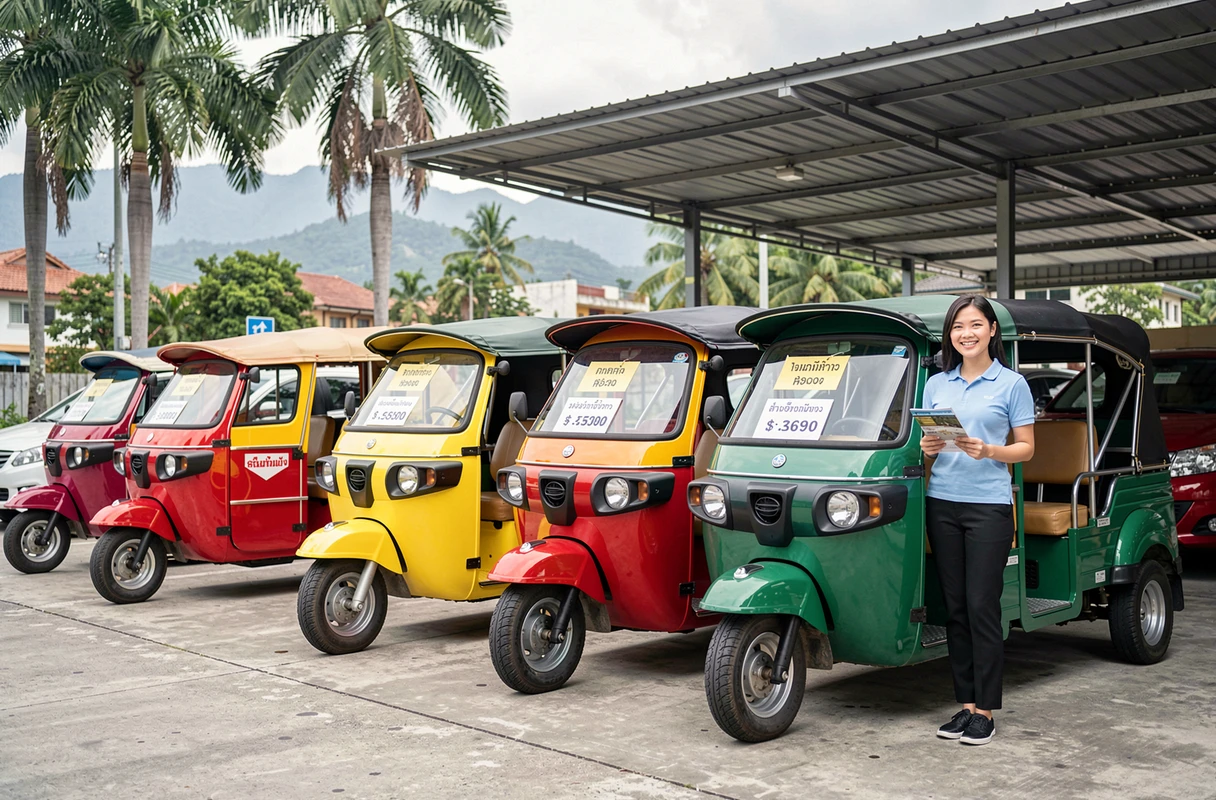
New: a variable entry ticket
A standard new tuk-tuk, gasoline engine, is at the high end for a vehicle in this category. Customized models (paint, sound system, LED lighting) significantly increase the bill. Some importers list non-negotiable prices, which contrasts with the local bargaining culture.
Used: real savings but technical risks
A well-inspected used tuk-tuk remains the most rational choice for a first purchase. Prices in the provinces drop significantly below Bangkok rates. However, transfer fees, the actual mechanical condition, and any structural repairs can absorb a good part of the initial savings.
- Check the condition of the chassis and rear suspension, often stressed by passenger overload in taxi use
- Verify the engine serial number’s compliance with the registration document (blue book)
- Request an extended road test, including uphill, to detect transmission weaknesses
- Beware of vehicles without traceable maintenance history, common in the informal market
Foreign surcharge and negotiation: what the real budget includes
The buyer’s nationality directly influences the offered price. This surcharge is not a one-time scam but a structural practice in the Thai market, documented by several specialized guides. A seller adjusts their opening price based on the profile they perceive.
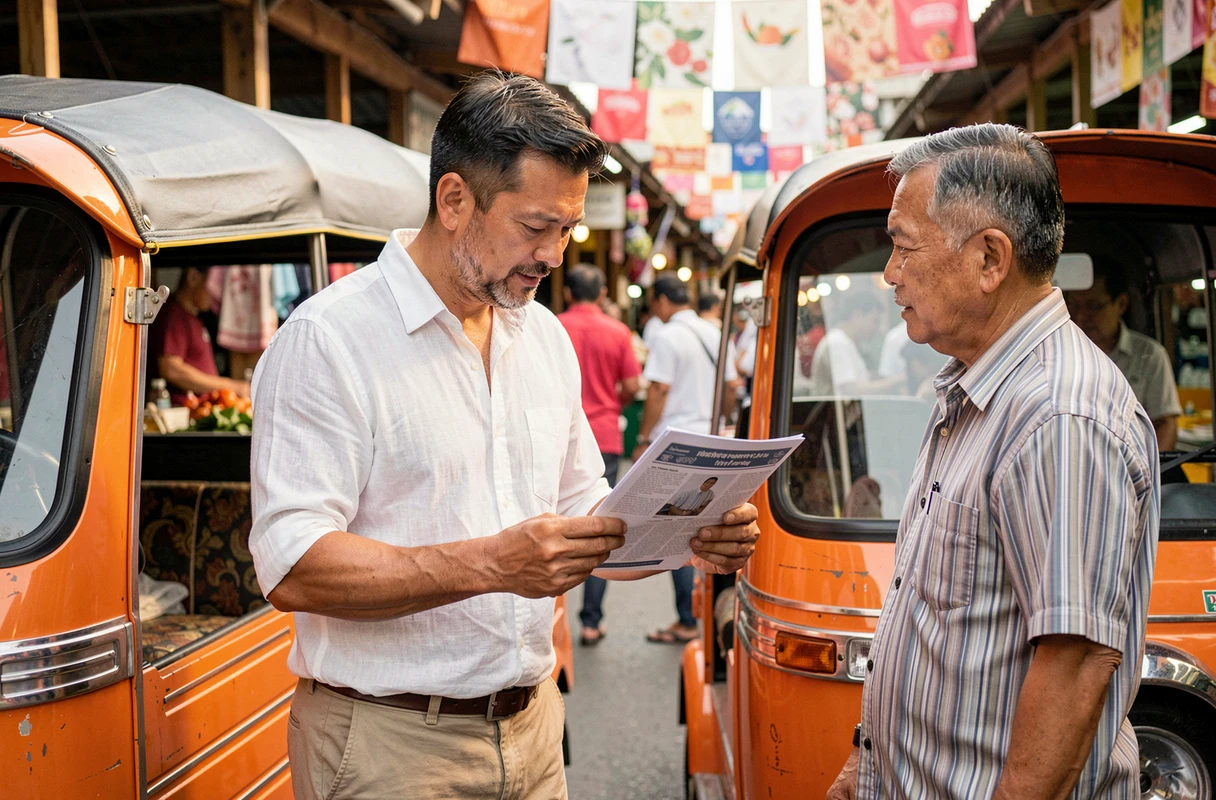
Negotiation remains the norm among local dealers. We observe that buyers who present themselves accompanied by a Thai interlocutor obtain significantly lower rates. Going through a trusted local intermediary also reduces the risk of hidden defects.
Often overlooked expense items
The purchase price represents only part of the total budget. Several additional fees increase the final bill:
- Transfer fees for registration and conversion to white plates (varies by province)
- Mandatory insurance (Por Ror Bor) and supplementary insurance, the latter difficult to obtain for a private tuk-tuk
- Specific mechanical maintenance: spare parts sometimes unavailable outside Bangkok or Chiang Mai
The overall budget often exceeds the purchase price by 20 to 40% once these items are included. Underestimating these additional costs is the most common mistake among foreign buyers.
Alternatives to tuk-tuks for transportation budget in Thailand
Buying a tuk-tuk for daily commuting is not always the most economical choice. In several cities, Grab, Bolt, or the songthaew are cheaper than a tuk-tuk over comparable distances, especially beyond a few kilometers.
In Bangkok, a metered taxi regularly costs less than a tuk-tuk ride on the same route. The tuk-tuk retains its appeal for very short trips in dense areas, where its maneuverability offsets the extra cost. For a trip across the country, renting a scooter starting at 200 baht per day offers a mobility-price ratio that is hard to beat.
The tuk-tuk as a personal vehicle is more justified by the project (restoration, collection, event use) than by pure transportation logic. The Thai roads, the vehicle’s limited speed, and the complete lack of safety devices make long trips inadvisable.
Buying a tuk-tuk in Thailand remains a feasible project, but the real budget far exceeds the price displayed in the ad. The conversion of registration and additional fees condition the feasibility much more than the price of the vehicle itself. Anyone embarking on this without addressing the white plate issue risks ending up with a legally unusable vehicle.