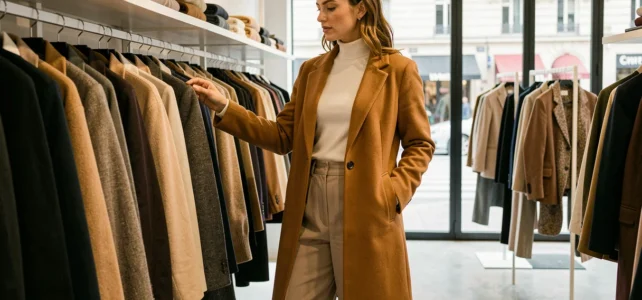
The autumn-winter 2026 fashion trends are taking shape against a backdrop of regulatory upheaval in Europe. The Ecodesign Regulation (ESPR) is changing the way brands manage their inventories, while fashion shows are imposing new silhouettes and palettes. What concrete signals help distinguish a sustainable trend from a fleeting showcase effect this season?
European Textile Regulation and Its Impact on Fashion Supply
Since July 19, 2026, large companies can no longer destroy unsold new clothing and shoes in the European Union, in accordance with Regulation (EU) 2024/1781 on ecodesign. This ban primarily affects fast fashion brands and large retailers.
The direct consequence for consumers: an increase in private sales of stock, online outlets, and resale channels through third-party platforms. These channels broaden access to quality pieces at reduced prices, outside of traditional “trendy” collections.
The same regulation provides for a digital product passport accessible via QR code on each garment, consolidating composition, carbon footprint, and recycling pathways. The infrastructure is set to be operational by mid-2026, with textiles among the first targeted categories.
A savvy buyer can already spot traceability information on certain labels that did not exist a year ago. Cross-referencing this data with stylistic choices allows for building a wardrobe that is both trendy and well-informed, as seen on the Kabanes fashion website, which features pieces aligned with these new criteria.

Key Colors and Fabrics for the Autumn-Winter 2026 Season
The autumn-winter 2026 fashion shows have revealed some clear chromatic trends. The shade blackcurrant purple, noted to be on the rise for men, is also making its way into women’s wardrobes in the form of thick knits and structured coats. It is a color that works both as a total look and as a unique accent on an accessory.
| Trend | Key Piece | Recommended Use |
|---|---|---|
| Blackcurrant Purple | Ribbed knit sweater, straight coat | Total look or color accent on a neutral base |
| Leather Jacket | Classic perfecto, aviator jacket | Layered over a midi dress or wide pants |
| Crochet | Bandana, head accessories | Transitional accessory from summer to autumn |
| Graphic T-shirt | Thick cotton, straight cut | Statement piece under an oversized blazer |
Crochet, long confined to bags, is migrating to head accessories (bandanas, headbands). This is an interesting signal: the artisanal technique is gaining ground in areas of the wardrobe where it was previously absent, opening up possibilities for low-cost personalization.
The leather jacket is making a strong comeback, worn this season over more fluid silhouettes than before. The combination of a perfecto and a midi dress, for example, creates a contrast of volumes that structures the outfit without rigidity.
2026 Tucked-In Style: Effective Combinations
Trends are only valuable when put into practice. Rather than accumulating “of-the-moment” pieces, it is better to understand the association mechanisms that allow them to be integrated into an existing wardrobe.
- The barrel jean (rounded cut at the thighs, tapered at the ankle) is worn with a fitted top to balance proportions. It replaces the straight jean in mid-season looks without requiring a complete wardrobe overhaul.
- The short colored jacket works as a transitional piece over a graphic t-shirt or a flowy blouse. It adds color without imposing a saturated total look.
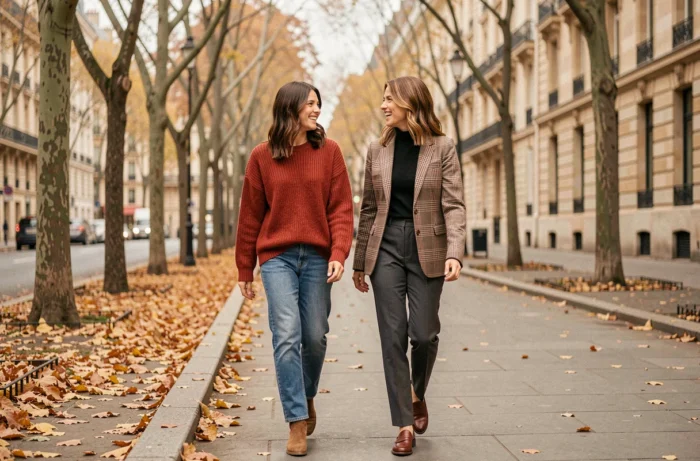
- The beige pant, an underestimated basic, serves as a neutral foundation for all the bold shades of the season (blackcurrant purple, butter yellow). It absorbs contrasts and remains appropriate in a professional context.
The goal is not to follow every micro-trend, but to identify those that align with what you already own. A strong piece per outfit is enough to refresh a style without looking costumed.
Textile Environmental Labeling: What Changes Starting October 2026
France is preparing for mandatory environmental labeling for clothing starting October 2026. This system will assign a visible score in stores and online, calculated based on criteria such as durability, recyclability, and the carbon impact of the product.
For consumers, this means a new comparison tool at the time of purchase. Two seemingly similar sweaters may display very different scores based on their composition and place of manufacture. This score does not replace aesthetic judgment but adds a layer of information that can help differentiate two stylistically similar options.
In practice, brands that have already incorporated recycled or certified materials into their collections will benefit from this labeling. Others will need to adapt their sourcing, which could change price ranges and the availability of certain materials by the end of the year.
Building a Personal Style Beyond Seasonal Trends
The autumn-winter 2026 trends share a common point: they emphasize the longevity of pieces rather than their novelty. The leather jacket, barrel jean, and beige pant are garments that can last through several seasons if the quality of construction is maintained.
A unique style relies on three or four mastered pieces, not on a wardrobe renewed every quarter. Blackcurrant purple or crochet adds a seasonal touch, but it is the coherence of cuts and materials that creates a personal signature.
The arrival of the digital passport and environmental labeling provides buyers with concrete tools to choose between two pieces. The next season is not just about a color palette: it marks the beginning of a transparency that changes the way we choose our clothing.