
The title refers to a new Lada Niva 4×4 in 2026, but the legal and commercial reality seriously complicates this perspective. Since the 12th package of European sanctions came into effect on December 19, 2023, the import of Russian passenger cars, including the Niva manufactured by AvtoVAZ, is prohibited throughout the European Union. Measuring what remains accessible, at what price and under what conditions: this is what this article quantifies.
Lada Niva 2026: acquisition options table in France
The French market no longer offers any Lada dealerships. The purchasing channels are reduced to three pathways, each with its own constraints.
| Acquisition Channel | Type of Vehicle | Approval | Main Risk |
|---|---|---|---|
| French used car | Niva already registered in France | Existing registration document | High mileage, rare parts |
| Intra-EU import (Germany, Bulgaria, Baltic countries) | Niva registered in another EU country | Re-registration via ANTS | Compliance check, administrative delays |
| “Gray zone” intermediaries | Vehicle presented as new | Uncertain | Customs hold, registration refusal |
The first column accounts for nearly all actual transactions. The other two assume a precise knowledge of customs procedures and the approval process.
To compare prices and finishes still available, the buying guide for the new Lada Niva 4×4 2026 details the price differences based on the condition and origin of the vehicle.
European sanctions and Lada Niva import: what regulation 833/2014 blocks
European regulation 833/2014, reinforced by successive sanction packages against Russia, explicitly targets goods of Russian origin. Passenger cars have been on this list since late 2023. The import of a new Niva manufactured by AvtoVAZ is prohibited throughout the EU, whether the purchase is for personal use or resale.
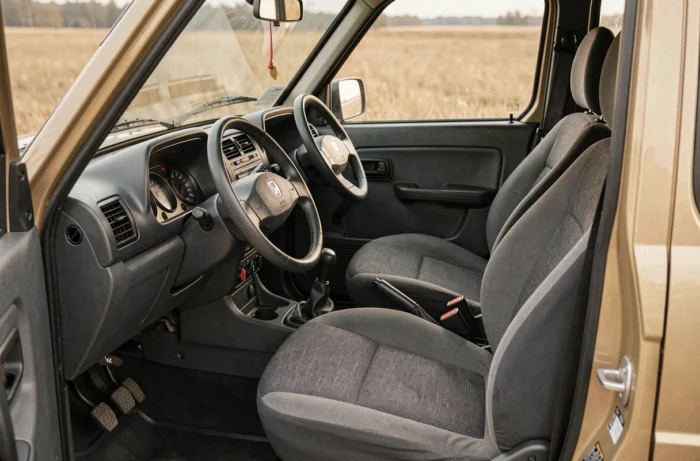
This prohibition does not apply to vehicles already present on European territory before the sanctions came into effect. A Niva registered in Germany in 2022 can therefore be purchased and re-registered in France without violating the regulation.
On the other hand, the few intermediaries offering a “new Niva” in 2026 operate in a legal gray area. The concrete risk: a vehicle blocked in customs or a categorical refusal of registration by the prefecture.
The specific case of modified Nivas in Germany
A parallel circuit exists for certain Russian models modified by German workshops before resale. The vehicle, once modified and locally approved, can be sold legally in the EU. Prices then rise significantly compared to the original Russian price, negating the argument of the cheap 4×4.
Approval and registration document: steps for a Niva imported from another EU country
Buying a Niva already registered in a member state remains the most reliable route. The approval and re-registration procedure follows a precise administrative pathway.
- Obtain a European Certificate of Conformity (COC) or, if not available, go through an isolated approval (RTI) with the DREAL, which involves a strengthened technical inspection of the vehicle.
- Have a French technical inspection performed at an approved center, even if the vehicle has a valid inspection in its country of origin.
- Submit the registration document request on the ANTS website with the tax clearance (proof that VAT has been paid or is not due), the certificate of conformity, and the technical inspection proof.
- Allow for a delay of several weeks between the submission of the file and the receipt of the final registration certificate.
A Niva without a European certificate of conformity requires an RTI, a longer and more costly procedure that may result in a refusal if the vehicle does not meet current standards.
Niva Legend or Niva Travel: criteria for choice in the used market
Both versions of the Niva circulate in the French used market, with distinct characteristics that influence budget and usage.
The Niva Legend retains the original compact size, with a short wheelbase and generous ground clearance. It is the preferred format for technical off-road use, where maneuverability takes precedence over road comfort. The Niva Legend remains the logical choice for regular off-road use.
The Niva Travel, newer, offers a slightly more spacious cabin and comfort features absent from the Legend (air conditioning, power steering standard on the latest versions). Its road behavior is closer to that of a compact SUV.
- For pure off-road: the Legend, lighter and shorter, goes where the Travel struggles.
- For mixed road and trail use: the Travel offers a more livable compromise for everyday use.
- For a modification project (roof tent, bivouac): the Travel has more loading space, but the Legend better accommodates heavy racks due to its stiffer structure.
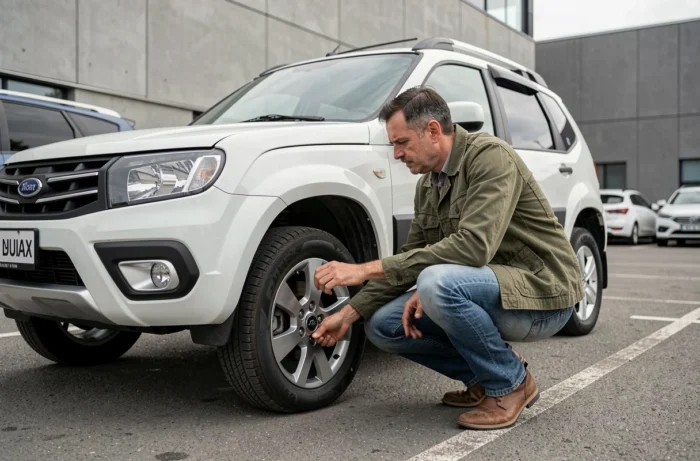
Realistic budget for a Lada Niva in France in 2026
Without an official network or new parts distributed locally, the total cost of ownership of a Niva far exceeds the displayed purchase price. Spare parts often pass through specialized suppliers in Eastern Europe, with variable delivery times.
Routine maintenance (oil changes, filters, brakes) remains affordable due to the vehicle’s simple mechanics. Complications arise with the bodywork, prone to corrosion, and with transmission components specific to the permanent 4×4 system.
A buyer comparing the Niva to the Dacia Duster 4×4, the only new competitor under 25,000 euros in France, must factor in this difference: the Duster benefits from a network, a manufacturer warranty, and parts available within 48 hours. The Niva offers superior off-road capability, but at the cost of a mechanical autonomy that the buyer must assume.
The choice between these two vehicles is not just a matter of price difference. It reflects two usage philosophies: one backed by a structured network, the other by a community of enthusiasts and resourcefulness.