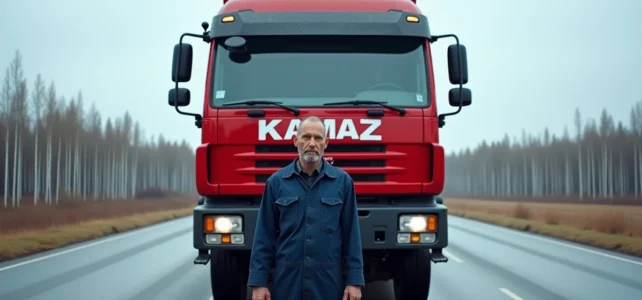
Kamaz is an automotive manufacturer founded in 1969, with its main factory located in Naberezhnye Chelny, Republic of Tatarstan. Initially known for its high-capacity diesel trucks, the Russian manufacturer has gradually expanded its scope: off-road competition, specialized utility vehicles, and more recently, alternative powertrain projects. Understanding the Kamaz universe requires distinguishing three technical axes that structure its current production.
Automatic Transmission and Engine Configuration of Kamaz Rally Trucks
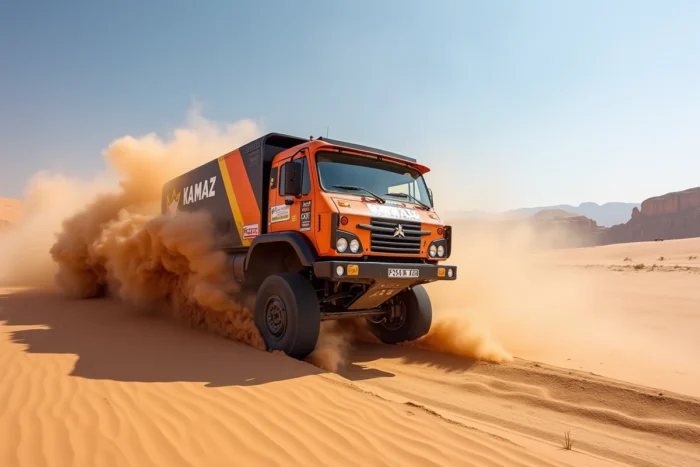
The most visible segment of Kamaz internationally remains competition. The Kamaz-master team has been fielding rally trucks since the late 1980s, initially using production vehicles (Kamaz-4310), and later on machines designed specifically for racing.
The current generation, represented by the Kamaz 43509, illustrates a technical turning point. The truck weighs approximately 9 to 9.5 tons and its top speed is legally capped at around 140 km/h. The choice of a 6-speed Allison automatic transmission marks a departure from the manual transmissions used in previous generations.
On a rally-raid course, manually managing gears in sand or rocky terrain requires a significant portion of the driver’s attention. The 6-speed Allison alleviates this cognitive load and reduces selection errors that can lead to overheating or transmission failure.
For those wishing to visit the auto section of Kamaz, the civilian range shares some technical blocks with these competition vehicles, providing a concrete glimpse into the level of engineering achieved.
Before the 43509, the Kamaz-master trucks of the 1990s already utilized mixed powertrains. The Kamaz-49252, for example, featured a 750-horsepower engine with a mid-engine layout and 25-inch wheels, an architecture designed to lower the center of gravity and improve high-speed cornering on rough tracks.

Kamaz Trucks: From the Soviet Assembly Line to Specialized Vehicles
The first Kamaz truck rolled off the assembly line on February 16, 1976. At that time, the Soviet Union was experiencing a construction boom that demanded vehicles that were both robust, fuel-efficient, and capable of carrying heavy loads over long distances.
Kamaz built its reputation on mechanical reliability in extreme conditions: Siberian cold, unpaved roads, muddy terrain. This foundational robustness remains the guiding principle of the range, from dump trucks to road tractors.
Several elements distinguish Kamaz’s design from the rest of the heavy truck market:
- A diesel engine architecture optimized for low temperatures, with integrated preheating systems from the earliest generations
- Suspensions designed to absorb deformations from poorly maintained roads, where European chassis prioritize highway comfort
- Maintenance designed for environments where spare parts and specialized workshops are scarce, with components accessible without heavy hydraulic tools
This design philosophy explains why Kamaz trucks are found in very diverse contexts: hydrocarbon transport, military logistics, infrastructure projects in remote areas. The manufacturer has signed agreements with several third countries for the export of its vehicles, expanding its presence well beyond the Russian market.
Electric Vehicles and Alternative Powertrains at Kamaz
The shift towards electric powertrains is a recent endeavor for Kamaz. The manufacturer has invested in the development of prototypes for electric buses and trucks, following a global trend affecting all heavy truck manufacturers.
The challenge for Kamaz is twofold. On one hand, adapting a historic diesel expertise to electric drivetrains that operate on radically different principles (thermal management of batteries, energy recovery during braking, sizing of packs to maintain payload capacity). On the other hand, offering viable electric vehicles in countries where the charging infrastructure remains in its infancy.
An electric truck without an appropriate charging network has no operational utility. This is the constraint that hampers all heavy truck manufacturers, not just Kamaz. The difference is that Kamaz’s primary market (Russia and partner countries) presents distances between urban centers and climatic conditions that further complicate the deployment of fast charging stations.
Electric Buses: A Testing Ground
Urban buses represent the most accessible segment for testing electrification. The routes are short, the itineraries fixed, and returning to the depot allows for overnight charging. Kamaz has directed part of its efforts towards this niche, where diesel performance matters less than reducing emissions in densely populated areas.
Design and Stylistic Evolution of Kamaz Vehicles
The design of Kamaz trucks has long adhered to a purely functional logic: angular cabin, flat windshield, bodywork easy to mass-produce. The early generations did not seek to attract visually.
Recent models show a notable evolution. The cabins adopt more rounded lines, integrated LED headlights, and digital dashboards. This modernization of design serves two objectives:
- Improving aerodynamics to reduce fuel consumption on long road trips
- Making working conditions for the driver more comfortable (soundproofing, ergonomics of controls, visibility)
- Positioning the brand against European manufacturers in export markets where vehicle appearance influences purchasing decisions
This stylistic transition does not come at the expense of robustness. The new chassis retain the structural reinforcements characteristic of Kamaz, but are dressed in contemporary bodywork. The result is a vehicle that remains suited to difficult conditions while displaying a level of finish comparable to that of international competitors.
The Kamaz universe remains rooted in heavy transport and competition, two fields where reliability is paramount above all else. The electric projects and the evolution of design show that the Russian manufacturer seeks to expand its market without renouncing the mechanical DNA that has built its reputation since the first truck rolled out in 1976.