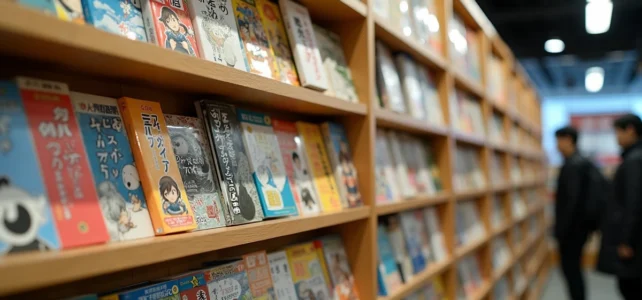
The term hentai, in its original Japanese meaning, refers to metamorphosis or perversion, long before it qualifies as a publishing genre. This linguistic distinction shapes the entire narrative and graphic architecture of the genre: in Japan, people are more likely to refer to ero-manga or adult seinen, with the word hentai reserved for content deemed deviant from social norms. It is the export to the West that has solidified the term as a generic label for all Japanese comics with explicit sexual content.
Graphic Codes of Hentai Manga: How the Line of Drawing Changes the Narrative
Hentai relies on a system of visual conventions that does not exist in any other tradition of erotic comics. Mosaic censorship or black bars structure the composition of the pages, forcing mangakas to shift erotic tension to other elements: exaggerated facial expressions, overwhelming onomatopoeia, tight cinematic framing.
This Japanese legal constraint (Article 175 of the Japanese Penal Code, which prohibits the explicit depiction of genital organs) has created a paradoxical graphic grammar. Artists compensate for partial occlusion with an emphasis on bodily fluids, anatomical distortions, and lines of movement. The result is a visual language where suggestion and hyperbole coexist in every panel.
We observe that Western publishers, when importing these titles, often remove graphic censorship to satisfy an audience accustomed to explicit porn. In doing so, they eliminate a constitutive element of the original Japanese narrative. A reader who wishes to understand the specifics of hentai manga must grasp that the mosaic is not a flaw, but a narrative tool in its own right.
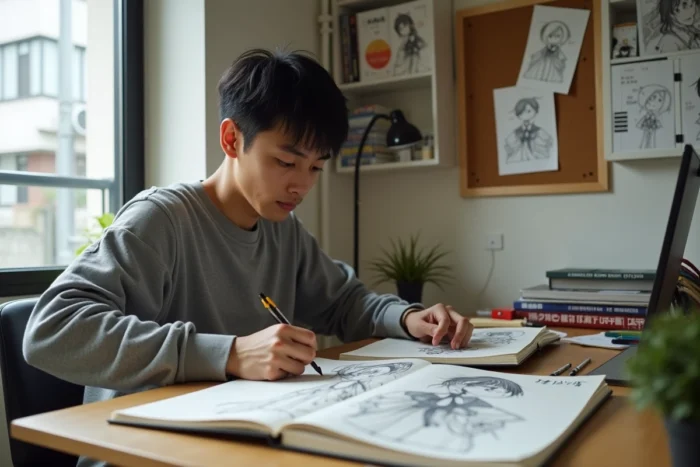
Sub-genres of Hentai: Japanese Editorial Taxonomy
Reducing hentai to a monolithic category is akin to confusing a thriller with a psychological drama. The Japanese market finely segments its adult publications according to the target audience, narrative register, and aesthetic codes.
- Josei ero targets an adult female readership, with stories focused on relational dynamics, fine lines, and slow dramatic progression. Yaoi (boys’ love with explicit content) is its most well-known branch internationally.
- Seinen hentai aims at a male readership and favors a variety of fantasies, from situational comedy to fantasy. Anthologies like Comic Kairakuten or Comic LO operate through short chapters by different mangakas.
- Doujinshi constitutes amateur or semi-professional production, sold at events like Comiket. These erotic fanzines often feature characters from popular franchises and serve as a creative laboratory for young artists.
Each sub-genre adheres to distinct layout conventions. Josei ero uses fine textures and detailed backgrounds, whereas seinen hentai relies on more pronounced black-and-white contrasts and close-ups.
The Role of Doujinshi in the Manga Ecosystem
Doujinshi functions as a breeding ground for recruitment for professional publishers. Recognized mangakas have started out by producing erotic fanzines at Comiket before being spotted by publishing houses. This circuit, specific to Japanese manga culture, has no equivalent in Franco-Belgian comics or American comics.
Publishers tolerate these unauthorized adaptations of their characters because doujinshi fosters fan engagement and enhances the visibility of franchises. This porosity between official production and amateur creation distinguishes the Japanese market from any other publishing market.
Regulation and International Pressures on Hentai Manga
The legal framework surrounding hentai in Japan is currently under tension. Organizations like Human Rights Now and several Japanese feminist collectives have intensified their campaigns for legislation to equate certain fictional representations of characters presented as minors with child pornography. These mobilizations are based on the recommendations of the UN Committee on the Rights of the Child.
Major publishers like Shueisha and Kadokawa are strengthening their internal compliance lines, even though the penal code has not been amended to clearly prohibit all fictional representations. The nuance is crucial: publishers are anticipating legislative changes by adapting their export catalogs, filtering certain titles, or altering the age and design of characters for Western markets.
This situation places manga professionals in a constant arbitration between creative freedom and reputational risk internationally. We observe that the pressure comes not only from institutions but also from online distribution platforms that apply their own moderation standards, often more restrictive than Japanese law.

Digital Distribution of Hentai: Transformation of Reading Circuits
The migration to digital has profoundly altered the value chain of hentai manga. Specialized platforms like DLsite or FANZA (formerly DMM) now concentrate the majority of sales, far ahead of the physical circuit of konbini and specialized bookstores.
Digital has exploded the production of erotic doujinshi, eliminating the logistical barrier of printing and event distribution. An artist can publish and monetize a title in just a few days, which has significantly multiplied the available supply.
For the Francophone readership, this dematerialization poses a translation problem. Scanlations (pirate translations by fans) remain the primary access vector, due to a lack of sufficient official licenses. French publishers like Le Lézard Noir or Isan Manga cover only a fraction of the catalog available in Japanese, focusing on titles with recognized artistic value rather than mass production.
Impact on French Pop Culture
The influence of hentai extends beyond the circle of avid readers. Its graphic codes (exaggerated facial expressions, lines of movement, visual onomatopoeia) permeate Western erotic illustration, character design in video games, and certain independent animation productions. Hentai has normalized a visual vocabulary of desire that transcends its original framework.
Manga conventions in France dedicate an increasing portion of their programming to questions of body representation and sexuality in Japanese comics, indicating that the subject is gradually moving from the realm of taboo into that of cultural analysis.