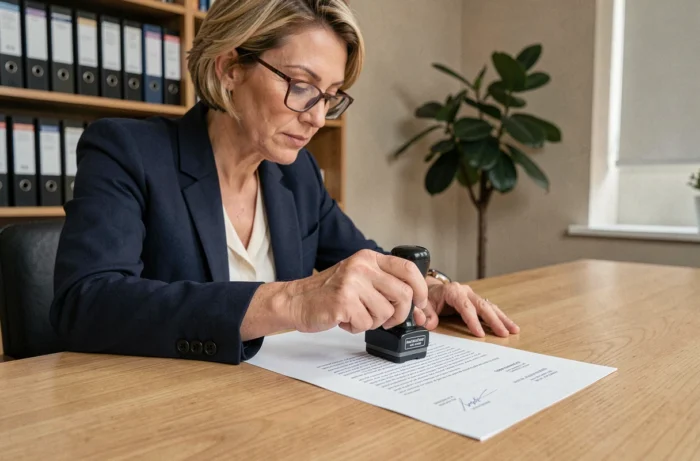
The self-certification of a document relies on a precise legal framework, often misunderstood. Since the removal of the certification of true copies for French documents intended for French administrations, the possibility of self-certifying a document is based on technical and legal mechanisms that go beyond a simple annotated photocopy.
Probative value of a self-certified digital copy in civil law
Articles 1366 and 1379 of the Civil Code set out the admissibility conditions for a digital copy as evidence. A faithful and durable reproduction of the original is sufficient to confer probative value, provided that the integrity of the file is guaranteed over time.
In practice, this means that an individual or a small entity can produce an opposable digital copy without seeking an administrative authority, as long as three technical requirements are met: fidelity of reproduction, durability of the medium, and traceability of integrity.
We recommend coupling digitization with a cryptographic hash mechanism (such as SHA-256) and a qualified timestamp. These technical elements transform a simple scan into a copy with probative value. Without them, the copy remains a reproduction without any particular legal force.
To self-certify a document in a digital context, one must therefore master the entire chain: acquisition, signing or sealing, and then archiving in a certified environment.

Certification NF 461, digital safe, and probative archiving
Certified digital safe solutions NF 461 or NF 203 currently provide the most reliable technical foundation for self-certifying documents. These standards guarantee the integrity, confidentiality, and traceability of archived files through unforgeable event logs.
The operation is based on three pillars:
- The digital fingerprint (SHA-256 hash) calculated at the time of deposit, which allows for the detection of any subsequent modification of the file
- The qualified timestamp eIDAS, which associates a certain date with the document and makes any backdating impossible
- The integrity log maintained by the archiving system, which records every access, consultation, or attempt to modify
A PDF document deposited in such a safe acquires a presumption of integrity far superior to that of a file stored on a personal hard drive. We observe that this approach remains unknown to individuals while it is common in companies subject to regulatory retention obligations.
PDF format and electronic signature
The PDF/A format (ISO standard 19005) remains the standard for long-term archiving. Unlike a standard PDF, it prohibits dynamic elements (JavaScript, external links, non-embedded fonts) that could alter the document’s rendering over time.
Adobe Acrobat and other tools allow for a qualified electronic signature to be applied directly to the file. This signature, backed by a certificate issued by a qualified trusted service provider under the eIDAS regulation, gives the document probative force equivalent to a handwritten signature.
The combination of PDF/A, electronic signature, and certified safe forms the most robust certification chain accessible to a non-professional.
Certified true paper copy: what remains possible at the town hall
The certification of true copies on paper has not completely disappeared. It still exists in two specific cases:
- French documents intended for a foreign administration, for which the town hall can still affix the mention “certified true to the original”
- Documents issued by a foreign administration, which can be certified true by the consular authorities of the issuing country
- Copies of acts held by public archive services, certified by the service holding the original in accordance with the heritage code
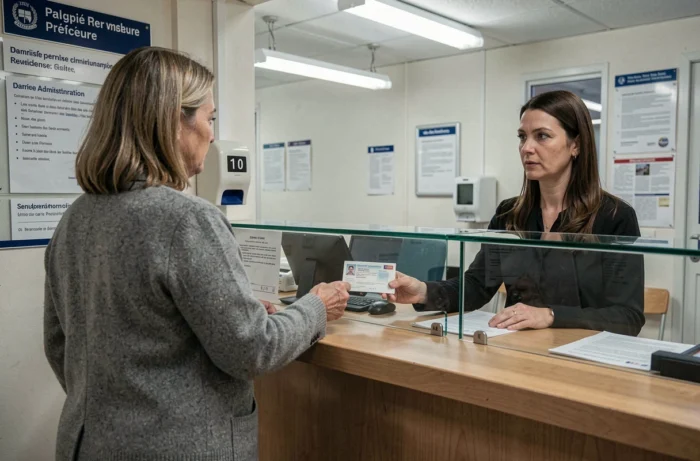
The procedure at the town hall requires the simultaneous presentation of the original and the photocopy, as well as an identity document. The municipal agent compares the two documents and affixes the mention, their signature, and the town hall seal.
Distinction between certified copy and sworn statement
For procedures within French territory, the sworn statement of conformity replaces the certified copy. The applicant writes by hand that the copy is true to the original, dates, and signs. This statement engages their criminal liability in case of falsehood.
The confusion between these two provisions generates refusals of files. A French administration cannot require a certified true copy for a French document. If it does, the applicant has the right to refuse and produce a simple sworn statement.
Digital judgment and paper certification as of October 1, 2026
A notable procedural change will come into effect on October 1, 2026, in civil procedure. The digital judgment becomes the reference minute. When a paper notification is necessary, the justice commissioner must certify the conformity of the paper version with the original digital version.
This reversal of logic (the digital takes precedence, the paper becomes the copy) illustrates the direction taken by French law. The verification of conformity no longer concerns the fidelity of a photocopy to a paper original but the fidelity of a printout to an authenticated digital file.
For litigants, this evolution reinforces the usefulness of mastering digital certification tools. A PDF document signed electronically and archived in a certified NF 461 safe offers superior legal security compared to a bundle of stamped photocopies, even in a contentious context.
Self-certification of a document is therefore no longer a matter of an administrative stamp. It relies on choosing the right file format, using a qualified electronic signature, and traceable archiving. The technical framework exists, it remains accessible, and its adoption by individuals is progressing as administrations themselves transition to digital.