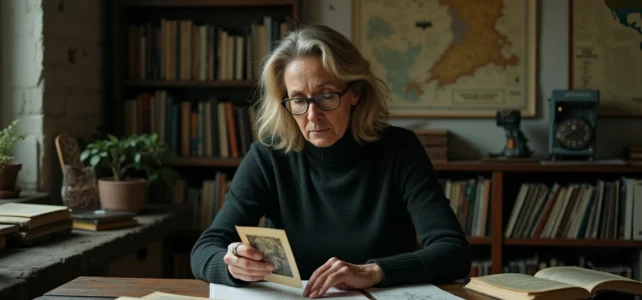
In France, the paranormal is no longer confined to enthusiast forums or late-night shows. With institutional exhibitions on witchcraft, the evolution of immersive experiences, and stricter regulations surrounding esoteric practices, recent paranormal news touches on concrete areas that go beyond mere thrills.
Witchcraft on display at the Château des Ducs de Bretagne in Nantes
One rarely associates a history museum with contemporary witchcraft. However, the Château des Ducs de Bretagne in Nantes hosted an exhibition entirely dedicated to the subject, showing how witchcraft is still practiced near you and how to spot its traces in everyday life.
The exhibition, open to the public with free admission for those under 18, did not limit itself to the pyres of the Middle Ages. It documented magical-religious practices still active in certain rural areas of France, featuring objects, testimonies, and local archives. This type of programming in an institutional setting marks a shift in tone: the paranormal moves from the realm of entertainment to that of ethnographic heritage.
To keep up with this kind of news as it unfolds, one can regularly find reports and analyses on the Paranormal News website, which aggregates events related to the supernatural across France.
Closure of the Manoir de Paris and new haunted experiences in France
The Manoir de Paris, a reference for immersive haunted houses in the capital, has permanently closed its doors after Halloween 2021. The building at 18 rue de Paradis now houses a school. For fans of scripted paranormal sensations, the disappearance of this venue has left a void.
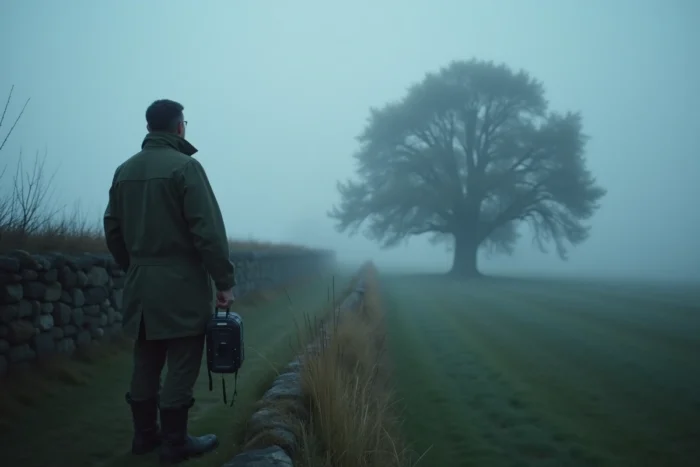
The next generation does not take the same form. According to an analysis of horror experiences in France for the 2025-2026 season, long-duration formats with continuous actors are replacing one-off events like “haunted houses.” The experience has shifted from a 30-minute attraction to immersions lasting several hours, sometimes over an entire night, in heritage sites (castles, former hospitals, industrial wastelands).
What this shift concretely changes
The economic model is transforming. Organizers are renting classified or abandoned sites for limited sessions, with reduced capacities. The public pays more, but experiences something that resembles immersive theater rather than a ghost train.
Feedback varies on this point: some participants find these formats too long, while others believe that the duration enhances the feeling of immersion. What is certain is that the market for immersive horror in France is restructuring around rarity and intensity, not volume.
Stricter regulations around esoteric practices and well-being
The paranormal in France is not just about ghost hunters. A whole economy revolves around fortune-telling, mediumship, naturopathy, and “energy healing.” In 2026, the regulatory framework is set to tighten significantly.
- Naturopaths and wellness practitioners face a tightening of regulations that more strictly governs therapeutic claims and conditions of practice.
- The Senate has produced a report examining legislative responses to phenomena disturbing public order, including certain esoteric practices.
- The Defender of Rights has issued an opinion on a draft law aimed at providing immediate responses to “disturbing phenomena,” a text that may directly concern gatherings or practices related to the supernatural.
For organizers of paranormal events (nights in haunted locations, public medium sessions), these developments require verifying the legal framework before each session. A séance in a classified castle does not fall under the same regime as a themed escape game.
Spirituality and trends for 2026
Specialized platforms in astrology and spirituality are noting a rise in online consultations and digital tools (card drawing apps, AI-generated personalized horoscopes). The boundary between the paranormal and personal development is blurring, complicating the work of regulators even further.
Paranormal and local heritage: reports that fuel tourism
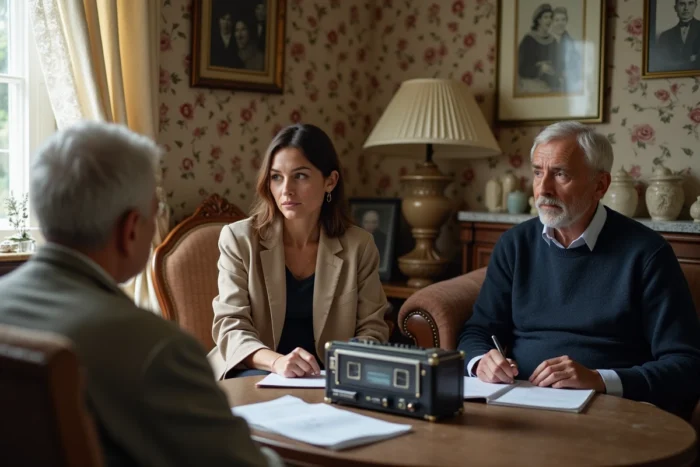
Outside major metropolitan areas, reports of unexplained phenomena serve as a tourist lever for rural communities. Notorious haunted castles, pilgrimage paths associated with apparitions, forests where testimonies of nocturnal lights have persisted for decades: these stories structure a niche tourism offer.
The phenomenon is not new, but its professionalization is. Local guides offer documented night tours, complete with municipal archives and testimonies from residents. This is far from television sensationalism: the approach aims to be ethnographic, almost museum-like.
This positioning attracts an audience that does not necessarily define itself as “believing” in the paranormal but seeks a unique cultural experience. The tourist offices of certain municipalities are now incorporating these tours into their summer programming, alongside vineyard visits or night markets.
French paranormal in 2026 stands at the crossroads of several dynamics: heritage, regulation, immersive entertainment, and local economy. The unusual news in the sector is no longer merely anecdotal. They reflect real cultural and economic changes, where the supernatural serves as a catalyst for very concrete issues of tourism, law, and leisure.