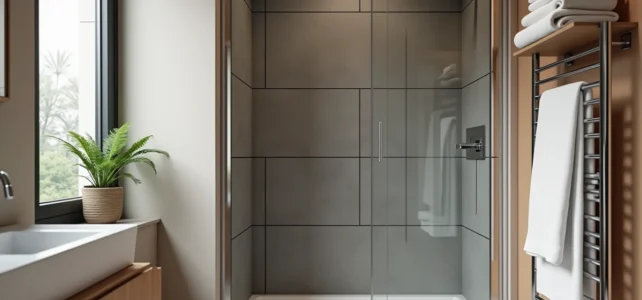
Between a narrow cabin where elbows touch the walls and a shower space where one can move freely, the difference sometimes comes down to ten centimeters. For a rental property owner, choosing the right shower dimensions can impact both occupancy rates and rent. What sizes do tenants consider acceptable, comfortable, or deal-breaking?
Shower Dimensions in Rentals: The Table of Common Formats
The shower trays available on the market are divided into a few standardized formats. Tenant perceptions vary greatly depending on daily use and the bathroom configuration.
| Format (cm) | Usable Area | Tenant Perception | Typical Use |
|---|---|---|---|
| 70 x 70 | Very small | Often considered too narrow | Old studios, small apartments |
| 80 x 80 | Small | Tolerated in studios, rarely appreciated | Small apartments, integral cabins |
| 90 x 90 | Acceptable | Minimal comfort threshold | T1, T2, shared housing |
| 90 x 120 | Comfortable | Attractive, good space/cost ratio | T2 and larger, furnished rentals |
| 100 x 100 and larger | Generous | Highly appreciated, Italian shower | High-end housing, accessible |
The format 90 x 90 cm represents the minimal comfort threshold for most tenants. Below this size, feedback during visits is often negative. To delve deeper into this topic, the standard size of a shower according to Cherry Déco details the actual expectations of occupants based on housing types.

Threshold of 90 x 120 cm: Why This Format Changes the Game in Rentals
The transition from 90 x 90 to 90 x 120 cm represents only 2,700 cm² more. This modest gain in space disproportionately changes the perception of the housing.
A rectangular shower tray of 120 cm in length allows for showering without the curtain or wall sticking to the body. For a tenant visiting five apartments in a day, this feeling of space marks an immediate difference compared to a competing property with an 80 x 80 cabin.
In the new housing stock subject to accessibility standards, showers below 90 x 90 cm are tending to disappear. The 90 x 120 cm format is becoming a common standard in recent constructions, raising expectations for more generous dimensions. Tenants accustomed to new housing transfer these requirements to older properties.
Classic Shower Tray or Italian Shower
The “zero threshold” Italian shower, defined by the CSTB as a space of at least 120 x 90 cm with integrated drainage and no step, appeals due to its aesthetics and accessibility. It creates a sense of volume even in a small bathroom.
However, there is a downside. Insurers and property management companies report a significant increase in water damage related to poorly executed large Italian showers (sealing defects, insufficient slope, missing thresholds). In condominiums, some regulations now more strictly govern these installations. A rental property owner must weigh the rental appeal of a zero threshold against the risk of damage if the installation is not flawless.
Shower or Bathtub in Rentals: What the Tenant Profile Demands
The choice between a shower and a bathtub is not just a personal preference of the owner. It directly depends on the targeted profile.
- For a T3 or larger intended for families with young children, the bathtub remains a selection criterion. It is used daily for bathing children and reassures parents about safety.
- For a T1 or T2 aimed at professionals or students, the shower clearly prevails. It consumes less water, takes up less space, and suits the quick daily routines.
- For a short-term furnished rental (LMNP or travelers), a spacious shower with a glass partition presents a polished image in listing photos, a direct factor in the booking rate.
The ideal in a large family home is to combine both: a bathtub in the main bathroom and a shower in a second water point. This configuration covers all profiles without compromise.
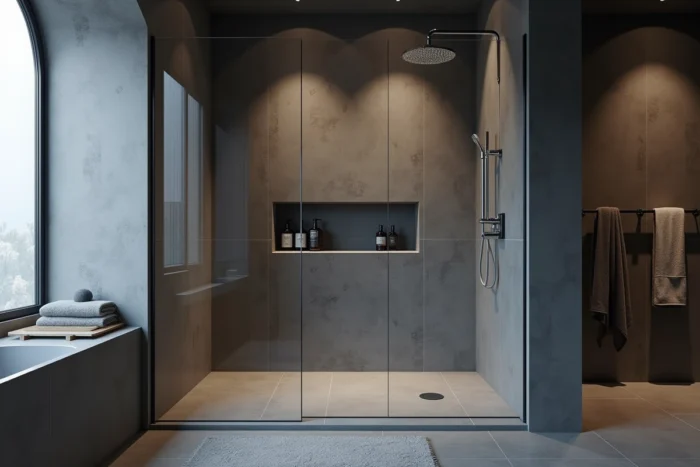
Common Mistakes Regarding Shower Dimensions in Rentals
Some technical decisions made during renovations can permanently harm the attractiveness of the property.
Installing a 70 x 70 Cabin to “Save Space”
This format, still present in catalogs, has the opposite effect of what is intended. The tenant perceives a cramped bathroom, even if the rest of the room is clear. It is better to reduce a vanity unit by a few centimeters and move to a minimum size of 80 x 80, or ideally 90 x 90.
Neglecting the Floor and Tiling Around the Shower Tray
A shower with good dimensions loses all its appeal if the surrounding floor is poorly laid or aged. The tiling around the shower tray contributes to the overall impression of comfort and cleanliness. A discolored joint or a peeling covering is enough to devalue the entire space during a visit.
Choosing an Italian Shower Without Checking Technical Feasibility
On upper floors, creating a walk-in shower requires sufficient drainage slope and proper sealing. Without these prerequisites, the risk of water damage increases, with consequences for insurance and relationships with the condominium. Having a technical assessment done before work avoids costs that far exceed the initial investment.
The shower format that generates the least friction in rentals is around 90 x 120 cm, with clear access and a neat finish. Tenants do not always explicitly express this expectation, but they penalize it through their choices when comparing two equivalent properties. Investing in these dimensions rather than in costly equipment elsewhere in the bathroom remains, for a landlord, the most profitable decision.