Accessing your digital pay slips on Arkevia requires understanding some technical mechanisms that the platform does not always make obvious. Between the actual retention period of the documents, the upcoming implementation of two-factor authentication, and the differences in treatment depending on whether the employee is still employed or not, situations vary. This guide measures the concrete gaps between what the digital safe promises and what the user actually receives in practice.
Retention of Arkevia pay slips: legal obligations and actual durations
The most common confusion concerns the duration for which the pay slips remain available. Two texts from the Labor Code coexist, and they do not say the same thing.
| Obligation | Legal Reference | Duration | Who is concerned |
|---|---|---|---|
| Retention of the duplicate pay slip | Article L3243-4 of the Labor Code | 5 years | Employer |
| Availability of the digital pay slip | Article D3243-8 of the Labor Code | 50 years or until the employee turns 75 | Employee (via the safe) |
Thus, the employer has only a five-year retention obligation. In contrast, the provider of the digital safe (Cegedim for MyArkevia) must guarantee access to the employee for a much longer period. For anyone wishing to view their pay slips on Arkevia after leaving the company, this distinction changes everything: the safe remains active even if the former employer has purged their own archives.
In practice, MyArkevia guarantees retention aligned with the legal requirement of fifty years. The personal account is not deleted at the end of the employment contract. The safe is linked to the employee, not to the company.
Two-factor authentication on MyArkevia: what changes in summer 2026
Cegedim has announced the deployment of generalized two-factor authentication (2FA) in summer 2026 for all MyArkevia accounts. Until now, access relied on a simple username/password pair, which represented a documented weakness for a safe containing sensitive payroll data.
Expected authentication methods
- Temporary code sent via SMS to the phone number associated with the account
- Validation via an authentication app (such as Google Authenticator or equivalent)
- Code sent by email as a fallback solution, if the phone is unavailable
For users who have not updated their phone number or email address in their personal space, 2FA could block access to the safe. Checking this information before deployment avoids a recovery procedure that is often longer than expected.
Check your details in the MyArkevia space
Updating is done from the portal myarkevia.com, in the “My Profile” section. The email address and phone number are listed there. If the account was created with a professional email that no longer exists (departure from the company, change of domain name), it must be replaced with a personal address before 2FA activation.
Logging into the MyArkevia portal: credentials and blocking cases
The initial activation of the account requires information provided by the employer: an employee ID, an email address, and sometimes an activation code sent by mail or by the HR service. Once the account is activated, access is done via the browser at myarkevia.com.
The most common blocks do not stem from a technical problem with the platform. They arise from three recurring situations:
- The email address used during activation has changed (switching from a professional email to a personal email, or vice versa)
- The password has been forgotten and the reset procedure sends the link to an email box that has become inaccessible
- The employer has never finalized the attachment of the employee to the safe, leaving the account in a state of partial activation
In the first and second cases, the recovery procedure goes through the “Forgot Password” form on the portal. If the associated email is outdated, you need to contact Cegedim support directly, as the former employer can no longer intervene on a safe they do not administer after the end of the contract.
Missing pay slips from the Arkevia safe: identifying the cause
Not all employers using Arkevia systematically deposit each pay slip. Some have only activated dematerialization from a specific date, which leaves a gap in the history. Pay slips prior to this date exist only in paper form or in another archiving system.
Another common case concerns companies that have changed their digital safe provider. If the employer has switched from Arkevia to another service (Digiposte, Primobox, etc.), the pay slips deposited before the migration remain on MyArkevia. Documents do not automatically follow to the new provider.
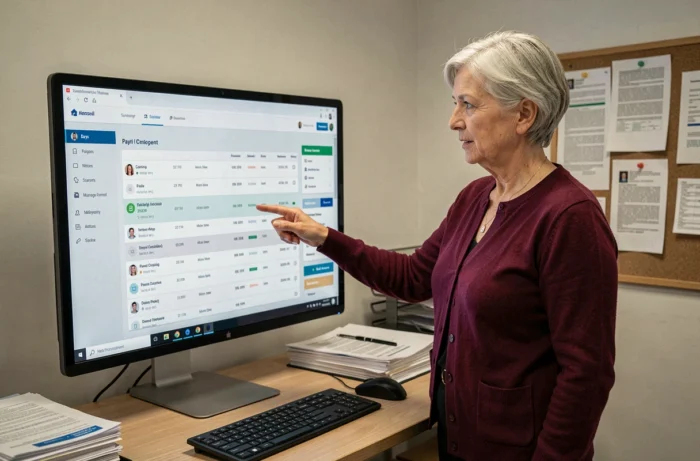
To distinguish between a pay slip that was never deposited and a pay slip that was deposited but is untraceable, the “My Documents” section of the safe displays the complete history of deposits. If a month does not appear in the list, it means the employer never transmitted it via Arkevia. The approach then is to contact the former HR service to obtain a copy, relying on the employer’s legal obligation to retain documents for five years.
The Arkevia digital safe remains accessible for free to the employee, with no duration limit related to the employment contract. The upcoming activation of two-factor authentication will make access more secure but requires prior verification of personal details. An updated email and an active password remain the two simplest, and most often overlooked, conditions for retrieving pay slips.